
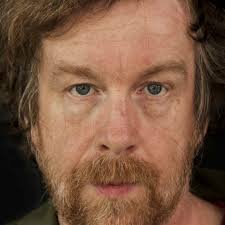

Kathleen McLaughlin: Kevin Berry, welcome back to Butte. Your latest book is set here, and I’d love to hear the story of how you found this place to begin with.
Kevin Barry: It’s a long and quite tormented story, really. And we have to go back to the far, distant reaches of my late 20s. I was working in Cork City as a freelance journalist, and I was doing fine. I was paying the rent and I was getting on okay, and I had an itch to write fiction and to make a proper commitment to it.
There were like 200,000 people in Cork at the time, and at least half of them I told I was going to write the novel, you know, it was coming. It was that classic late 20s moment in your life where you’re saying, “what are you about? What are you doing?”
So I decided I’m going to save up, and I’m going to go for three months to a place called Allahies, which is on the Beara Peninsula in West Cork. I got down there, and I had three months where I didn’t have to do any journalism. I could just write a novel. I opened the notebooks, and I had nothing. I didn’t know what it was going to be, what I was going to write about. I started to go on these little walks, bitter and cranky little walks around the mountains in West Cork, and literally one day, almost stumbled into a hole in the ground, which was part of the abandoned copper mines out there. They’re not as well caged off as they are in Butte. I would say you could easily fall down one the old mines. They played out in the 1880s and as I started to walk around there every day, there’s kind of an eerie, haunted feeling about the place. I started to read up on it, and I learned that all the miners or a lot of them had, almost en masse, moved to Butte, Montana, because there were jobs there. America was being electrified. The copper was being drawn out. And the word was going around was that you could make $6 a day. That was a multiple of what you could have made running sheep or fishing back in West Cork, with the mines gone, they took off.
I think of by the early 1890s of the 30,000 people in Butte at that time, almost a third had Irish background. So the idea of this mad little County Cork town transplanting itself to the Rocky Mountains was just too good to ignore. I decided, okay, the only way to go at this is to go to Butte and see what it’s like and see what else I can find about it.
KM: This is the first time you’ve been back since 1999; 25 years. Does it feel the same to you? You’ve described that first experience as Butte having a melancholy feel to it.
Kevin Barry: I very, very firmly believe that every town and every little city has its own defining atmosphere and its own kind of energy, and that you can actually tune into it very quickly and, very often, first impressions are correct. I got into Butte the first time in ‘99 at six in the morning in the old Greyhound station and walked up through town and went into a place called the M&M, which I had heard of. It was legendary. What was palpable about everyone I talked to and everyone I met and the feeling around the city was that it was a warm place. It was kind of an open-hearted place. It felt very friendly, but underlying that there was also, of course, an evident melancholy about the city, a sense that this was a place that had been through hard times, that had been through pain, and those in combination with each other, gave it a unique atmosphere I felt. I’ve got that again, strongly.
I mean, on the surface, it looks quite different now, in some ways. There were no yoga mats in 1999 and you can’t walk down Main Street now without getting slapped in the eye by one. I know there’s been a population spike here, a little spike in recent years, and there is the sense of people moving back in and seeing what they can do here and trying to build communities. I love to see that, especially in the artistic sector.
This is probably quite a cliché way of putting it, but the resource in this town to be mined from these hills now is the stories of the place. You know, it’s all phenomenal, the depth and the entanglements of the of the history here. It’s a great resource for writers and artists and musicians to tune into the kind of the atmosphere of the place, the history of the place and the surface of it has barely been scratched.
KM: You wrote about this place in a way that that a lot of people do not, which is you wrote about it from the study of the people and the characters. How did you come to decide that that was the way to write about the (American) West, to write a Western and to write about Butte was through this kind of intensive character study?
Kevin Barry: I floundered my first attempt at the book when I went home to Cork in 1999. I diligently trotted out 120,000 words – I know exactly, because I always keep a work diary with word counts. You know, writers are people who count words. And I found them, and they’re quite, they’re quite forlorn documents, those work diaries in ‘99 and early 2000. I got so 120,000 which is three times longer than the book that it eventually became, but I didn’t know how to shrink it down. I went home with such great research material. I had such great stuff for a novel. I had copies of letters looking for wives from the 1890s and all the stuff about the bars and the brothels and the opium parlors, everything that was going on with the unions and the Irish infiltrating themselves, as is our way into the local police course and it did local politics, and I just couldn’t find a grip on it. I couldn’t find a point of purchase where I could really kind of make a story out of it. And I got all this kind of atmosphere down on the page, but I could, but I had no people, and I kind of slowly but surely, I brought it to some kind of finish, but I shifted it to one side. I knew I was never going to send it out to look for an agent or anything. I hadn’t published any fiction at this point.
And then I wrote six other books and 21 years passed. The thing you learn about any kind of writing practice or any creative practice, is you never really throw anything away. You abandon projects and stories all the time, and you shift them to one side, but you never really throw them away, because they are still residing in this lonely little room at the back of your subconscious, and they’re just waiting for something to spark it, to bring it to life. One day late in the pandemic, I was walking in the hills in County Sligo in the Northwest near the Atlantic, where I live now. I was fishing around for an idea for a new novel. I was due to write a novel, and I just had a vision of one of those bored pandemic walks, the same woods you’re seeing every day for the last two years. I had a little vision of seeing a young couple on a horse riding, double riding. Oh, they’re trying to get out of someplace quick, runaway lovers. That’s a great setup. I thought, what if it’s Butte Montana in 1891 I won’t have to do the research. I have it already. I know all that stuff.
I didn’t need to refresh it at all. I remembered everything from it. I remembered the names of the bars and the way the light falls across Granite Street in the evening at five o’clock or six o’clock in October. It was really embedded. Once I had the characters Tom and Polly, I realized I don’t need to go into every element of beauty in the 1890s, there’s too much.
I just need to tune in to a single part of it, which is the lonesomeness of migrant workers. And that’s what the book is really about. It’s a love story. It’s an escapade caper, but ultimately, it’s about their lonesomeness and how it eases for a while when they come together in that place at that time. Writing fiction can be a very, very slow game. Sometimes it can take a long time for your characters to find their stage, or, in the case for me, the other way around, for the stage to find its characters.
And we’ve found it again. I said to my wife, Olivia is with me (in Butte), “we found it again.” It’s a very moving place. We’ve just been down on a visit to the Frank Little grave. It was tremendously lovely to see the way people still visit and leave mementos about labor history and we did our bit today. You know, there’s something really, really authentic about Butte, that you can feel very palpably, and it’s something that’s increasingly rare.
KM: You said the story of Tom and Polly and The Heart in Winter is a story of migrant workers. Do you think that there are things happening in the world today that might have helped you land upon those characters, or did they just kind of come to you organically?
Kevin Barry: That’s a really good thing to point out. I guess what’s been going on in Ireland in the last 25 years has made the emotion of that state more clear to me. For the first time, Ireland in the last quarter century has become a place with a lot of immigration into it, and that’s been fantastic for the country, I believe. And a lot of Irish people believe that.
But of course, there are small elements who have used this to whip up kind of anti-immigrant racist rhetoric. If any nation on the face of the earth should take in as many people as we physically can, it’s Ireland, because we almost invented the state of being an economic refugee. We always went everywhere looking for work, and generally did very well in our migrancy. Were sociable, chatty people who, kind of who get on in places, you know, and then have also had a kind of a native canniness or or cunning for organizing ourselves in new societies. We see this all over Irish America, but I think we’re seeing the loneliness of new immigrant communities setting themselves up in Dublin now, and all the Irish cities and towns. We see Brazilian communities setting themselves up, African communities from Nigeria, from everywhere, around West and North Africa, some of the Eastern Europeans, war refugees from Ukraine at the moment. Our village, a small village in County Sligo, has couple of dozen Ukrainians now and weight of that emotion around you, I’m sure, has helped in viewing the Butte scene of the 1890s.
KM: You’ve said you wanted to write a Western, and this is your Western novel. How do you write a Western like this? It’s not like Yellowstone, where you’re just talking about cowboys and horses and telling the same old story. I feel like your novel that’s rooted in Butte is very different from that. So how did you go about thinking about westerns, and what were some of your influences?
Kevin Barry: I think to start it and to open it up from Butte in the first instance gives you a nice way of skewing it from the start, because Butte isn’t a typical western town. It’s an industrial mining town, and that gives a different flavor, straight away.
I would say, of all the various fiction writing and playwriting and various things that I’ve written, I had a special fun writing this novel. Westerns are great fun to have a go at. It’s a forgiving genre. It naturally kind of gives you momentum and the narrative propulsion, because people have to be jumping up on horses and lighting out for fresh territory. That’s the fundamental rule. You can’t really do a Western without that happening. But once that happens, they’re going to have encounters, they’re going to get into scrapes, they’re going to be in great danger. They’re going to be brave or not brave. So it naturally gives you something as you move through it, just from the genre alone. It was also fun to focus in on the fact that Bute wasn’t just an Irish place, but Bute was an incredibly cosmopolitan society in the 1890s.
I was reading Mary McLane last night, who was another one of the reasons I failed, I think, in the 1990s because I came across her then for the first time, and I opened that first book.
And reading, I can remember exactly about a third way through the book. She does about a four-page set piece on everyone you see on the street walking down true Butte on a busy day. I thought, “I could never do that. I could never get this as good as that.” I kind of give up in horror at how brilliant she was….
(but) I realized you could write a Western without having a single American accent, though I did give one to Polly.
KM: In terms of influences, I think I read that you had watched Deadwood and that was an influence on this work. Did that spark anything for you?
Kevin Barry: Yeah, it’s funny, actually, when, when I think of the kind of I abandoned the first attempt in 2000 and I didn’t take it up again till late ’21. and in the intervening 21 years, I hardly ever thought about my Butte attempt. But I do remember when Deadwood started to stream, I guess was in Ireland. It might have been about 2006 or seven, and immediately loving it, thinking, “that’s how you do it. That’s how you do that era.”
The great thing about Deadwood is the writing that David Milch largely responsible for, at least in the opening season, is that tone of the register. They weren’t speaking like that the 1870s, but it feels right, and that’s all that matters with historical fiction. They weren’t speaking in this almost Shakespearean register in Deadwood, but if it feels right, that will bring the people to life. It was a great lesson for this book.
Also, the use of profanity in Deadwood was marvelous and a great influence. People do often talk to me and Irish writers generally about profanity in our books. “What’s it about? Why is there so much of it?”
There are two answers there. Pat answer: We’re good at it, probably the second-best in the world after the Spanish. In my opinion, no one matches the Spanish for swearing. But also, I think it’s very interesting to think of profanity and think of the language you would have heard in the Board of Trade in 1892 in Butte. You know, they weren’t speaking drawing room English.
But it’s also the fact that profanity and swearing and curse words, it’s a defensive use of language, and it comes out of the Irish colonial experience. English was the language of the ruling class of the occupying force in the country, and we were forced to speak it and forced to use it, and by God, we were going to subvert it and we were going to dirty it up. That led it into a beautiful profane musicality in the language.
It’s been a really lovely thing to get letters from Butte, from readers here who have loved the book, some to an obsessive degree.
KM: The other day, someone asked you if you ever do writing workshops, and you said, ‘No, I don’t come from that world.’ So how did you learn to write?
Kevin Barry: I guess, like, like every writer you talk to, I had the really lucky experience of wonderful English teachers in school, who told me when I was 12 or 13, “you write off the cuff. It’s very natural to you. It does not feel forced.” And that puts an idea in your head as a kid. I fell into the classic kind of teenage poetry phase, as well as a tormented Goth in 1980s Limerick City. I had a very specific problem as a Goth, in that I’m Ginger-haired, like many Irish people, the Goth thing just doesn’t look right with ginger hair. So I had a special reason to write doomy-gloomy Goth poetry, but the problem with writing poetry in Ireland is you throw a stick on the street and you hit a poet over the head. We have a standing army of, like, quarter of a million poets, you know.
I decided to cede the field quite early and concentrate on fiction. I started a degree course in what is now the University of Limerick, but I left after a week and a half because a local newspaper set up and they were looking for a cub reporter, an old fashioned cub reporter. I was 19, and somebody who knew me from school said ‘he’s really good writer, and he’s into this kind of thing.’
Limerick was very depressed at the time, had a lot of trouble with crime, with gang feuds and things like this. It was great territory for a club reporter, to do the court meetings, to do the council meetings. A city of 100,000 people, that’s great training for a writer, for any kind of a writer, even if you turn out to be a fiction writer. It takes a lot of the preciousness out of composition. You know you can always get words down on the page no matter what you’ve been up the night before. You can always write, if you put your mind to it.
KM: Last question, what are you reading right now?
Kevin Barry: At the moment, it’s completely unavoidable this week that I’ve been reading Mary MacLane. I have great admiration and still an air of disbelief that she was writing like this in the late 1890s. She was decades ahead of her time, style-wise, and in terms of moxie and as a feminist, and as a self-declared genius with her snout in the air. I just love it. It’s glorious stuff, and it’s been a real treat to delve back into it while I’m here.
(This transcript was edited for length and clarity. Please listen to the audio for the full interview)